
Ryvita Original Crispbread
Ryvita
Swap: Ryvita Original Crispbread — instead of Jacob's Original Cream Crackers
Label check: Excellent (92)
Tesco
Published 29 October 2026
To read a UK food label, start with the ingredients list on the back: it is in order of weight, so the first item is the one there is most of. Then check the allergens in bold, any E numbers, the type of oil, and the nutrition table per 100g.
See all the swaps free - make your free accountThe front of a pack is there to sell. The back is where the facts are. This guide walks you through each part, in plain English.
UK rules say ingredients must be listed in order of weight. The heaviest goes first. So the first two or three items make up most of the food.
Here's a short list as an example:
Ryvita
Swap: Ryvita Original Crispbread — instead of Jacob's Original Cream Crackers
Label check: Excellent (92)
Tesco
Ryvita Original lists wholegrain rye flour, rye flour and salt. So it is mostly rye.
A long list is not always a problem. But a short list is easier to understand.
Sometimes you'll see a number next to an ingredient, like "Olive Oil (28%)". This is called QUID. It stands for Quantitative Ingredients Declaration.
UK rules say a label must show the percentage of an ingredient if:
So you can see how much of the named thing is really in there.

Sainsbury's
Swap: Sainsbury's Mackerel Fillets in Olive Oil
Label check: Excellent (88)
Protein: 21g per 100g
Sainsbury's
This tin lists mackerel at 71% and olive oil at 28%.
Bold words are allergens. UK law names 14 allergens, and they must stand out on the list. Most packs use bold. Some use capitals or underlining.
The 14 allergens are: celery, cereals with gluten, crustaceans, eggs, fish, lupin, milk, molluscs, mustard, tree nuts, peanuts, sesame, soya, and sulphur dioxide or sulphites.
An E number is a code for an approved additive. UK rules say each additive must be shown with what it does, then its name or E number.
So you'll see things like:
Here's a label with one additive, shown by its job and name:

Aldi
Swap: Aldi Chopped Tomatoes
Label check: Excellent (88)
Protein: 1.5g per 100g
Aldi
The FSA keeps the full list of approved additives and E numbers. See the link at the end.
Some people choose to avoid some additives. Some don't mind. We don't make claims either way. We just show what's there.
Look for the word "oil" or "fat". Then look at which plant it names. If it says "vegetable oil", UK rules say the plants must be named, often in brackets. For example: "vegetable oils (rapeseed, sunflower)".
Here are two labels with olive oil as the only oil:

M&S
Swap: M&S Collection Extra Virgin Olive Oil Crisps with Mediterranean Sea Salt 125g — instead of Walkers Cheese & Onion Multipack Crisps 6x25g
Label check: Excellent (92)
M&S, Ocado
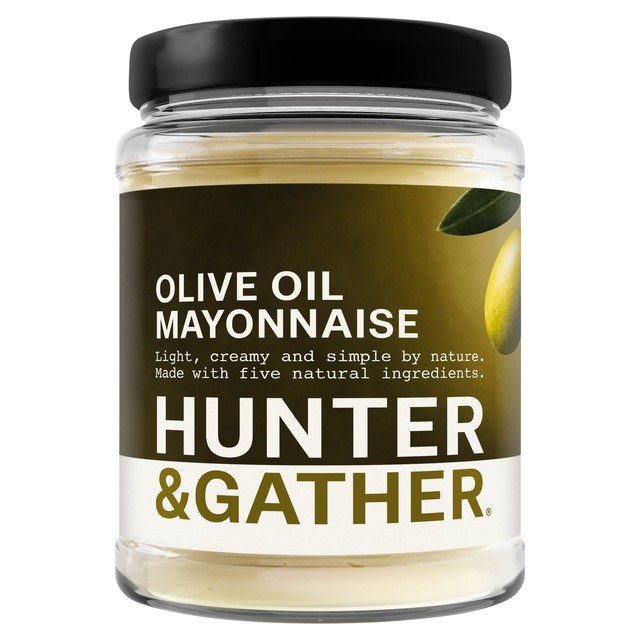
Hunter & Gather
Swap: Hunter & Gather Olive Oil Mayonnaise — instead of Hellmann's Real Mayonnaise (400g)
Label check: Excellent (92)
Ocado
Sugar has lots of names. Look for:
These are plain, with no added sugar:

Aldi
Swap: Aldi Skyr Icelandic Style Fat Free Yoghurt
Label check: Excellent (88)
Protein: 11.1g per 100g
Aldi
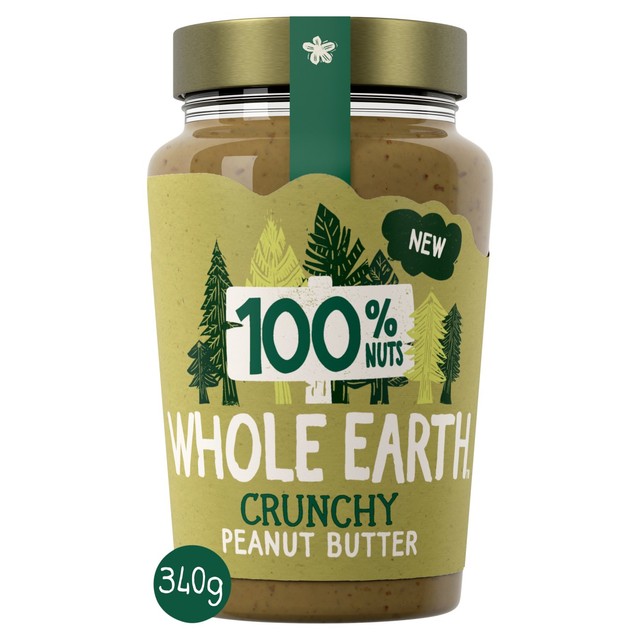
Whole Earth
Swap: Whole Earth Crunchy Peanut Butter Imp
Label check: Excellent (88)
Protein: 27.7g per 100g
Aldi, Morrisons, Tesco
The skyr is just yoghurt. The peanut butter is just peanuts.
Some packs show red, amber and green colours on the front. This front-of-pack scheme is voluntary in the UK. Not every pack uses it.
The colours are set per 100g. For example, salt is red (high) above 1.5g per 100g, and green (low) at 0.3g or less. Sugar is red above 22.5g per 100g.
The full nutrition table on the back is per 100g too. That makes it easy to compare two packs.
No. Always read the back. A pack can say "no added sugar" and still list fruit juice concentrate. "Natural" is not a strict term on its own.
Plant drinks are a good test. This one is water, oats, calcium from seaweed and salt:

Plenish
Swap: Plenish Zero Sugar Oat Drink — instead of Oatly Oat Drink Barista Edition
Label check: Excellent (92)
Ocado
Many others add oil, gums or sugar.
The FSA says use-by dates are about safety, and best before dates are about quality. Always check which one is on the pack, and follow the storage advice on the label.
Here's a sausage that is easy to read: pork, water, salt, pepper and sage.
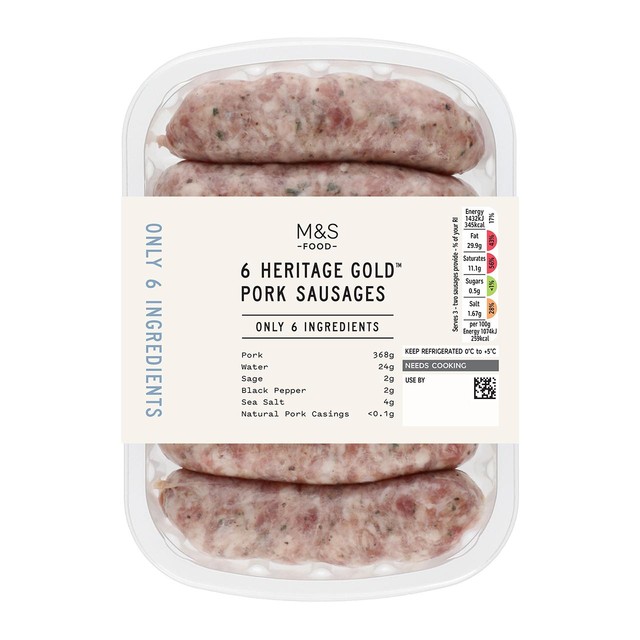
M&S
Swap: M&S Only 6 Ingredients Heritage Gold Pork Sausages — instead of Richmond 8 Thick Pork Sausages
Label check: Excellent (92)
Ocado
What is listed first on a food label? The ingredient there is the most of, by weight.
Why are some words in bold on ingredients? They are allergens. UK law says the 14 allergens must stand out.
What does QUID mean? Quantitative Ingredients Declaration. It's the percentage shown next to some ingredients.
Are traffic light labels compulsory in the UK? No. They are voluntary. The nutrition table on the back is required on most packed foods.
Want help with a label? Take a photo of it in The Better Basket, and we'll read it for you.