
Aldi Fat Free Quark
Aldi
Swap: Aldi Fat Free Quark
Label check: Excellent (88)
Protein: 12.3g per 100g
Aldi
Published 29 October 2026
The best place to find high protein yoghurt with no sweeteners is the plain pots: skyr, quark and Greek yoghurt. The ones below have 9g to 12g of protein per 100g, and the list is just milk, yoghurt or cultures.
See all the swaps free - make your free accountMany "protein" yoghurts with fruit or flavour add sweeteners, gums or sugar. This guide shows plain ones that don't, and how to check a pot.
We don't rank them. But we can show you the ones that pass our rules. All of these:
Quark has the most protein of the pots we've checked:
Aldi
Swap: Aldi Fat Free Quark
Label check: Excellent (88)
Protein: 12.3g per 100g
Aldi

Skyr comes next:

Aldi
Swap: Aldi Skyr Icelandic Style Fat Free Yoghurt
Label check: Excellent (88)
Protein: 11.1g per 100g
Aldi
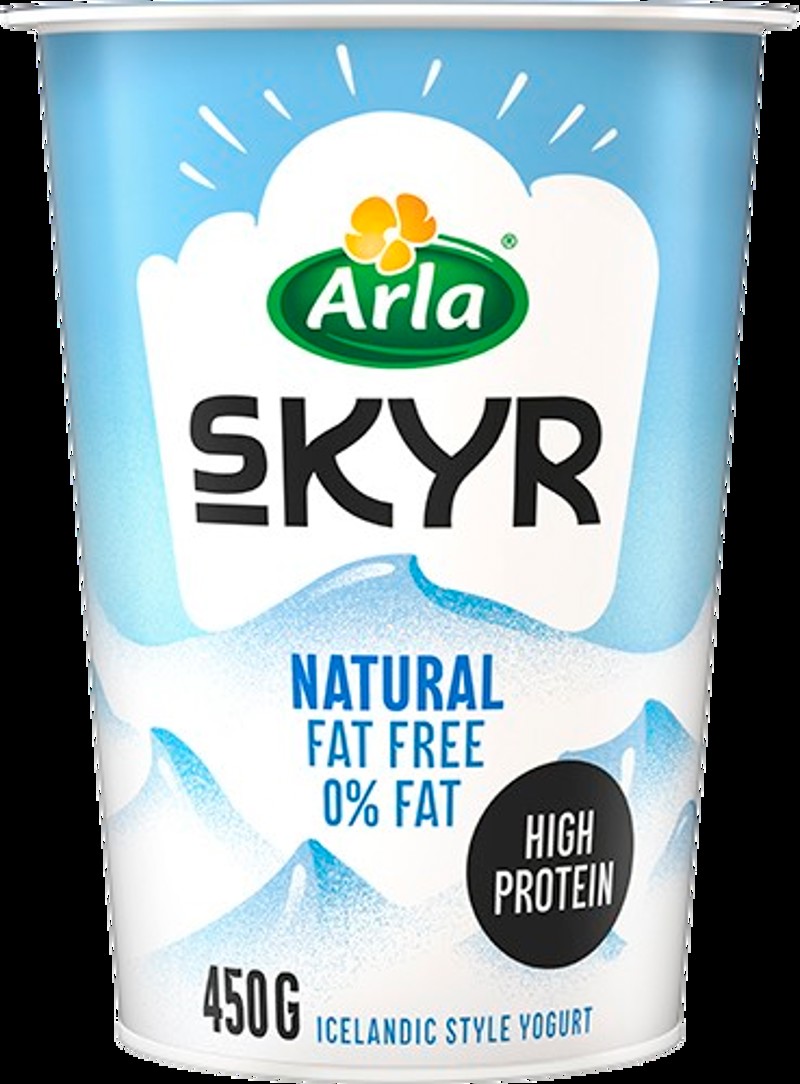
Arla
Swap: Arla Skyr Natural Fat Free Icelandic Style Yogurt
Label check: Excellent (88)
Protein: 10g per 100g
Asda
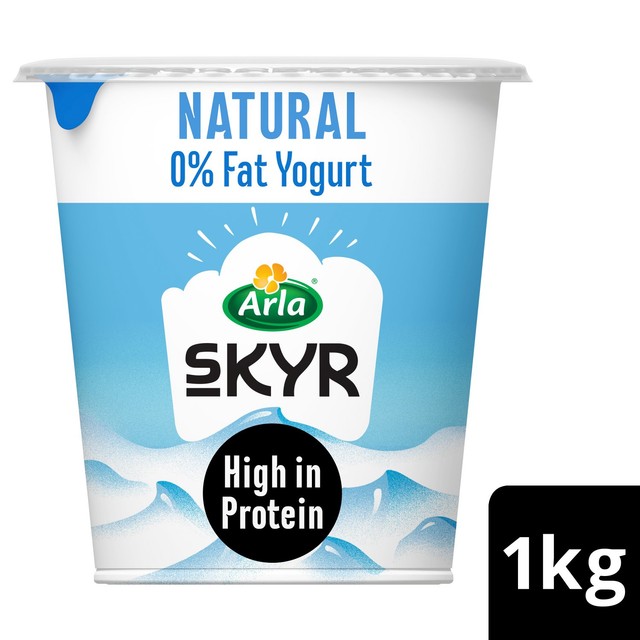
Arla
Swap: Arla Skyr Icelandic Style Yogurt Simply Natural 1kg — instead of Flavoured yoghurt with added sugar
Label check: Excellent (88)
Protein: 10g per 100g
Morrisons
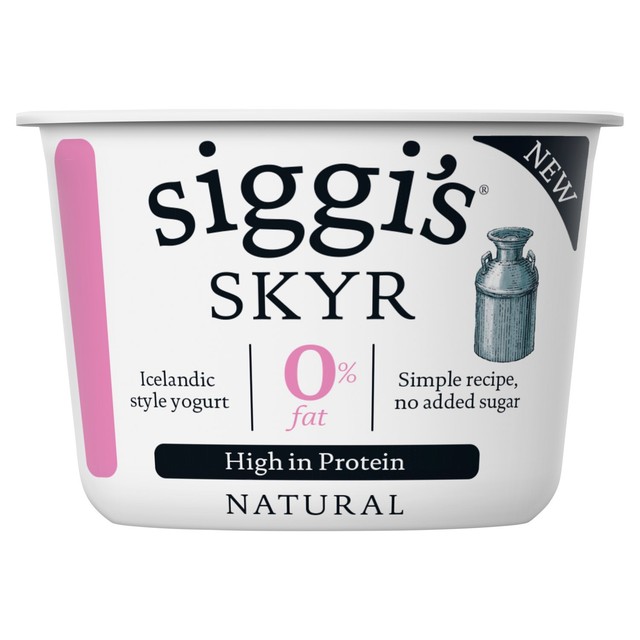
Siggi's
Swap: Siggi's Skyr Natural 0% Fat Yoghurt 450G — instead of Flavoured yoghurt with added sugar
Label check: Excellent (88)
Protein: 9.5g per 100g
Morrisons

Danone
Swap: Danone Skyr 0% Fat
Label check: Excellent (88)
Protein: 9.3g per 100g
Tesco, Sainsbury's
Greek and Greek-style yoghurt:

Fage
Swap: Fage Total Lactose Free 0% Fat Greek Yogurt
Label check: Excellent (88)
Protein: 10.3g per 100g
Sainsbury's

M&S
Swap: M&S Authentic Greek Yogurt Natural
Label check: Excellent (88)
Protein: 10g per 100g
M&S

Brooklea
Swap: Brooklea Greek Yogurt 0%
Label check: Excellent (88)
Protein: 9.8g per 100g
Aldi

Yeo Valley
Swap: Yeo Valley Greek Recipe
Label check: Excellent (88)
Protein: 9g per 100g
Tesco, Asda
See our full high protein yoghurt with no sweeteners list.
It depends on the pot. A plain skyr made from milk and cultures has a very short list. A flavoured protein pot might list sweeteners, flavouring, starch and gums.
The word "protein" on the front won't tell you. The list on the back will. We don't use the word "ultra processed" for single products. We just check the list against our rules.
These are some you may see. Each is on the FSA's list of approved additives:
Our rules leave out sweeteners. We make an exception for stevia and monk fruit. But none of the pots on this page use any sweetener at all.
Some people choose to avoid sweeteners. Some prefer to add their own fruit or honey. We don't make claims either way.
The protein number is per 100g. Many pots are bigger than that. A 150g pot of skyr with 10g per 100g has about 15g in total.
They are all made from milk. They are strained in different ways.
All three work in sweet and savoury food.
Fat free pots are often a little higher in protein per 100g. That's because there is less fat in each spoon. But full fat pots can still be high. Check the nutrition table. Both kinds can pass our rules, as long as the list is short.
Plain pots can taste sharp. Here are some ideas:
Which yoghurt has the most protein in the UK? Of the plain pots we've checked, quark has the most. Ours have about 11g to 12g per 100g.
Is skyr high in protein? The plain skyr pots we've checked have 9g to 11g per 100g.
Do Arla Protein yoghurts have sweeteners? Recipes change, so check the pot. Take a photo of the label and we'll check it.
Is fat free yoghurt sweetened? Not always. Plain fat free pots are often just skimmed milk. Flavoured ones often add sugar or sweeteners.
Standing at the yoghurt shelf? Take a photo of the label in The Better Basket, and we'll check it in seconds.